
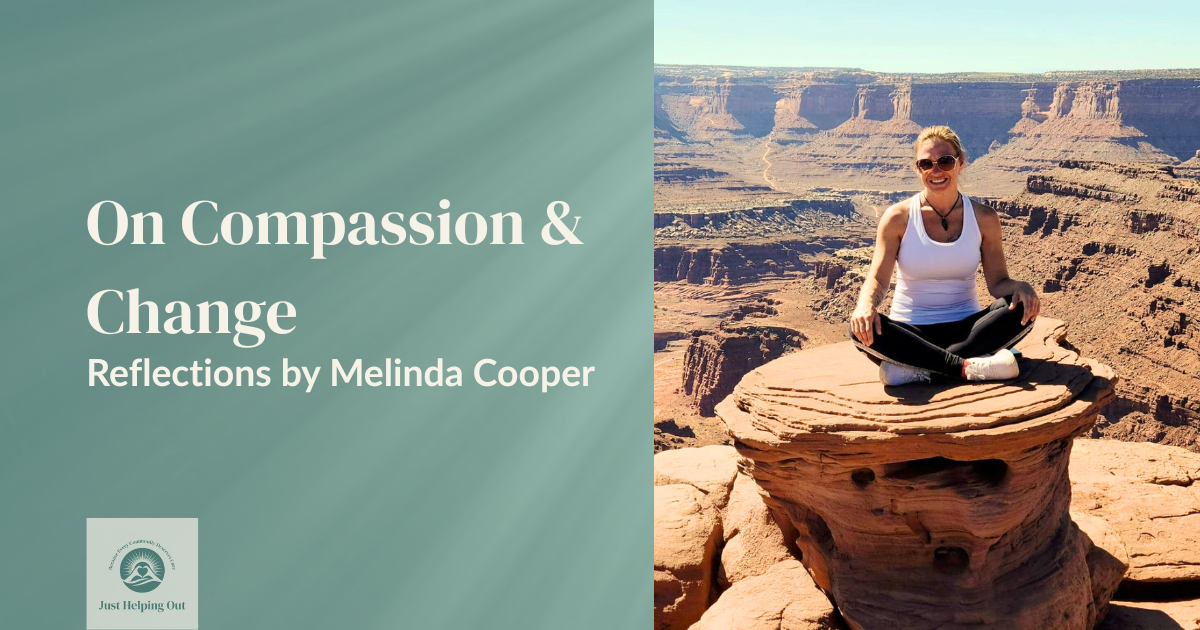
Care as a Creative Act
Care and creativity come from the same place — the willingness to see, to listen, and to respond. Both are acts of noticing and of love.
I’ve come to see that care and creativity are made of the same thread.
Both begin in attention — in slowing down long enough to notice what others might pass by. Whether I’m standing in front of a canvas or sitting in a moment of connection with someone who’s hurting, the feeling is the same: an invitation to witness, to respond, to bring something gentle and human into the world.
In art, we talk about light — how it lands, what it reveals, and the shadows it creates. In care work, there’s light, too. The kind that flickers quietly in small gestures: a conversation that eases fear, a resource shared at just the right time, a reminder that someone is seen. Both require the same kind of presence — not the loud, performative kind, but the steady attention that says you matter.
“Presence matters more than perfection.”
Creating is a form of listening. So is care.
When I paint, I follow instinct and intuition — responding to what emerges instead of forcing it. The same is true in outreach and harm reduction. Every interaction asks for openness, for staying curious rather than controlling the outcome. Over time, I’ve realized that this approach — one rooted in trust and responsiveness — is a creative act in itself.
The world often tries to make care mechanical. Systems measure outcomes and productivity, turning compassion into checkboxes and numbers. But real care lives in the spaces those metrics can’t touch — in the improvisation, the patience, and the willingness to be moved by another person’s story. Creativity reminds us that care isn’t data. It’s an art form.
When I step back from a finished painting, I can see the layers — all the moments of hesitation, choice, and correction that make it whole. Care has layers, too. Every act of showing up, every attempt to bridge understanding or ease suffering, adds depth to the bigger picture. None of it is wasted. Even the parts that feel messy or uncertain belong to the process.
Maybe that’s what keeps me painting. And maybe that’s what keeps me caring — the knowledge that both are works in progress, and that beauty isn’t found in their completion but in the continual practice of creating something better.
Because every act of care, like every brushstroke, says: I see you.
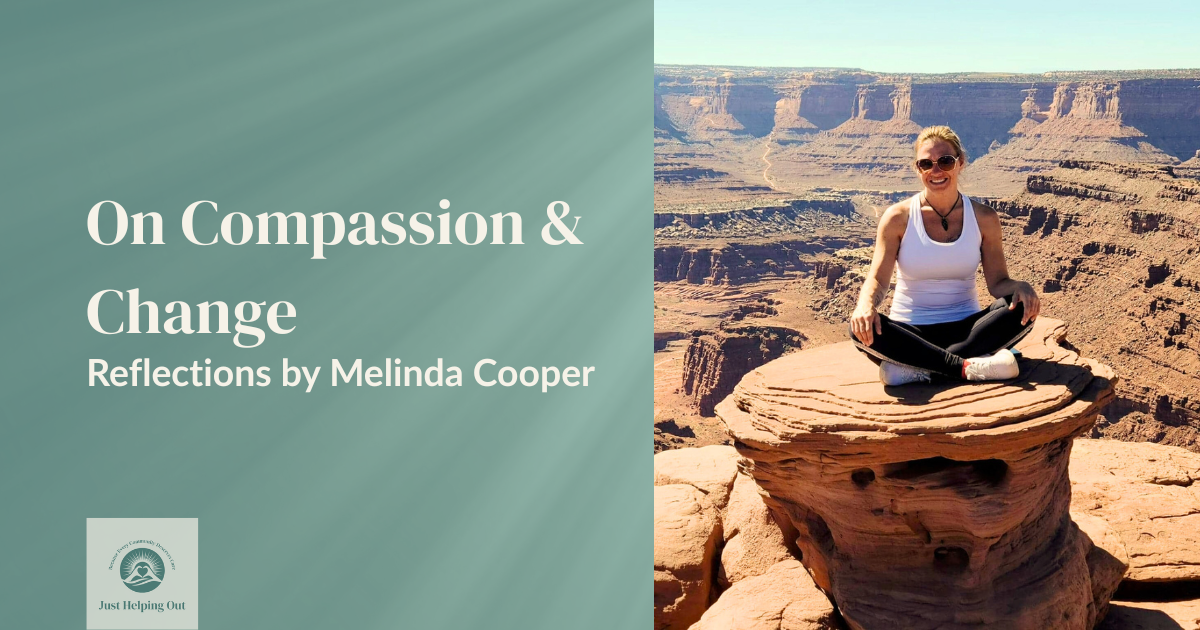
The Quiet Power of Starting Late
Staring a business at 45 taught me that growth doesn’t follow a timeline, it follows courage. Reflections on purpose, wisdom, and beginning again.
I used to think there was a timeline for everything — a window when you’re supposed to have it all figured out. Career, family, direction, purpose. But real life has a way of teaching you that growth doesn’t follow a calendar. It follows courage.
Starting a business at forty-five wasn’t part of some grand plan. It was the result of a thousand smaller moments — quiet realizations, unfinished ideas, and the persistent tug of what if there’s another way?
When I launched Just Helping Out, I didn’t feel “late.” I felt ready. Ready in a way I never could have been at twenty or thirty. Because by forty-five, you’ve already lived through the experiments — the jobs that drained you, the systems that disappointed you, the lessons that taught you what actually matters. You’ve learned that purpose doesn’t come from perfection, but from persistence.
“Starting late means starting wiser.”
You know when to say yes, when to walk away, and when to rest instead of quit. You’ve learned to see people — really see them — and to build things that honor that humanity.
And maybe most importantly, you’ve stopped waiting for permission.
There’s a quiet power in beginning again. A deeper kind of confidence that doesn’t need to prove anything — it just moves with intention.
So if you’re standing at the edge of a new beginning, feeling like your time has passed — remember this:
You’re not behind. You’re seasoned. You’ve earned every ounce of clarity that brought you here.
And sometimes, the best beginnings come after we’ve lived enough to understand why we’re starting at all.*